
Barn Town’s steady growth avoids missteps
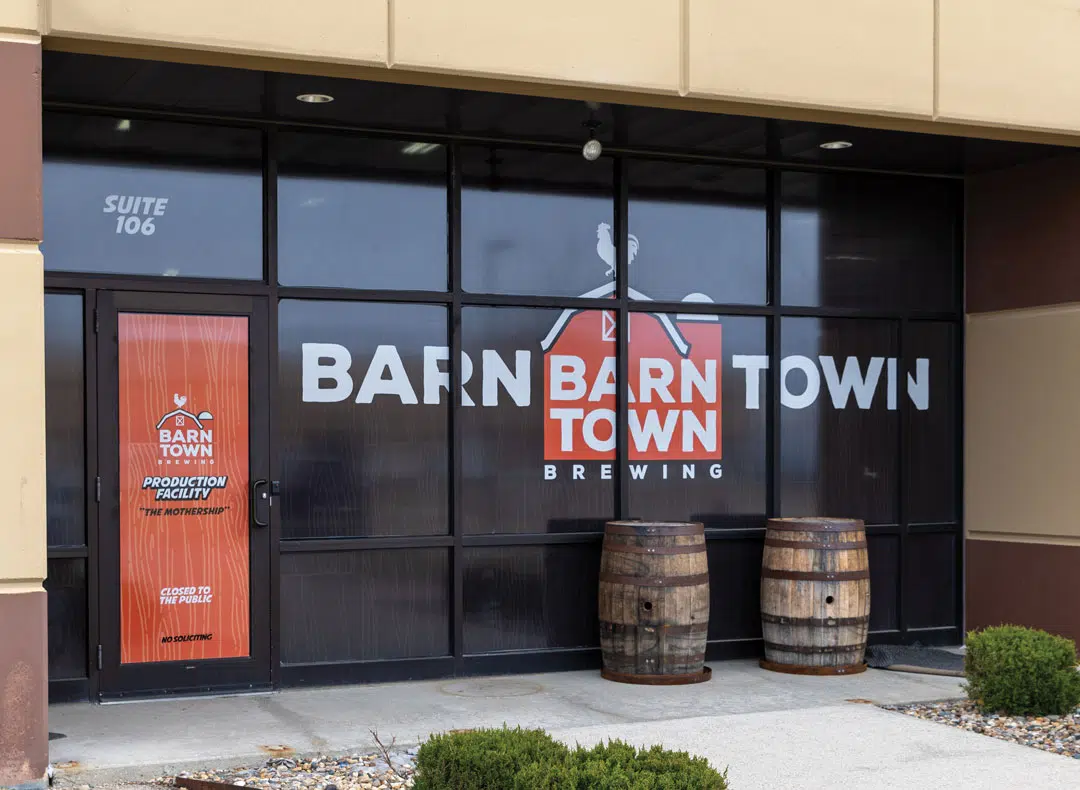
This Business Record article highlights a local business and its continued growth, reflecting the strength of entrepreneurship in West Des Moines. Stories like this showcase how thoughtful expansion and innovation contribute to the community’s economic development and long-term success.
Source: Business Record
About three years ago, Pete Faber bought land on Waukee’s west side with plans to build a production facility for his brewery, Barn Town, which had outgrown its space in a strip retail center along the 9500 block of University Avenue.
The vision was to build a production brewery capable of producing the brewery’s full lineup of beers, sours, seltzers and nonalcoholic beverages, with a restaurant to follow in a second phase. Architectural drawings were completed and building materials selected.
Before the project moved any further along, Faber slammed on the brakes.
“I got scared and said ‘Nah, let’s not do this,’” Faber said.
Instead, the Des Moines native explored other ways to expand, including a potential acquisition of Kinship Brewing, which closed in 2023 amid financial struggles. That idea fell through as well.
The turning point came when Faber learned of roughly 20,000 square feet available in a warehouse at 1350 SE Gateway Drive in Grimes — a space with which he was familiar. His son had played basketball there when it housed a sports facility known as The U.
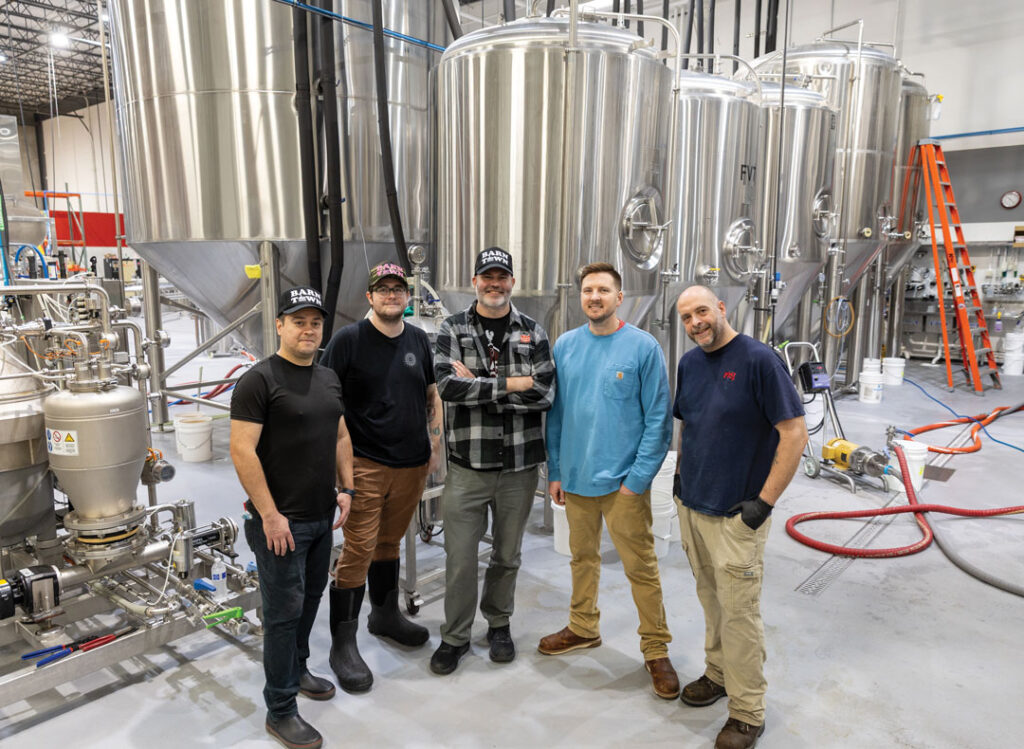
Over several months, the space — now dubbed “the mothership” — was transformed into Barn Town’s production hub. By early May 2025, the brewery was turning out core beers such as Iowa Gold, Classic Amber, Mango Wheat and Neon Hazy, along with its popular sours and seltzers.
“I know I was a little slow to move on the expansion, but that’s how I’ve always done things — slow and steady,” said Faber, 48. “This felt much more comfortable and didn’t leave me feeling overextended.
“We’re still racing. We’re still competing — just at a pace I’m comfortable with.”
Stay open or close?
Faber spent over 16 years in Chicago after graduating from the University of Iowa with an art degree. A bartending job led him to owning and operating restaurants in the Windy City. In 2016, Faber and his wife, Beth, decided to move back to Iowa to raise their two children and be closer to their families.
Faber wanted to open a brewpub in the Des Moines area and looked at several available spaces including along Ingersoll Avenue and the East Village before settling on the strip center in West Des Moines.
“I wanted this to be a community-supportive place and I wanted to do things people hadn’t really seen much of,” said Faber, who opened Barn Town in February 2017. “We had things on the menu that my servers and customers couldn’t pronounce. We had charcuterie before it was even a normal mainstay offering. … We decided to back things off a bit and not expand too fast.”
Barn Town set itself apart from other brewpubs with its eclectic beer, sour and seltzer offerings. The brewery began with producing its core beers and then added its seltzers and sours, many of which are gluten-free. While Barn Town regularly makes batches of its core beers, brews like Rocket Pop Sour, were typically made once a year. How long the brew was available depended on its popularity with customers.
“We did that to keep people excited. We call it Christmas every week or every other week,” Faber said. “If you offer customers the same thing every time they come in, then they’ll get bored and go somewhere else. But if you give them a different experience within the same four walls, they’ll come back.”
Faber struggled to keep Barn Town afloat in its first couple of years, not because of weak demand, but because he couldn’t find enough reliable employees, he said.
The staffing challenges made it difficult to step away. Even short family vacations felt out of reach, said Faber, adding that he often called friends for advice on whether to close the kitchen and serve drinks only.
“I was feeling good about what we were doing but I wasn’t feeling so good about how long we’d be able to do it,” Faber said. Today, Barn Town’s 70-person staff is top-notch.
COVID helped Barn Town
In October 2019, Barn Town moved from selling its beverages in growlers and crowlers to 16-ounce four-packs. Getting the new canning process up and running smoothly helped the brewpub continue to operate throughout the pandemic, Faber said.
In spring 2020, at the start of the pandemic, Barn Town sold its fourpacks – and take-out meals – through an assembly-line style setting that moved customers quickly throught the front door and out the paio after they collected their purchases. The brewpub promoted new releases on social media and as soon as they were canned, the four-packs were put in the cooler by the checkout register. Most didn’t stay there for long.
“People looked forward to our releases and there were usually people waiting for those first cans to come off the line,” Faber said. “The community really supported us through COVID and we were super thankful.”
Faber said he began thinking about the expansion soon after the pandemic ended. The beer production team, who worked in about 1,200 square feet of space, was continually getting in each other’s way as they made 3,000 barrels of product a year. Pallets of empty and filled cans had to be moved out of the way each morning to start production. At the end of the day, the pallets were moved again.
“We were playing pallet Tetris every day,” Faber said. “I was seeing people struggle and was worried about morale.”
But, he said, he also was worried about expanding too fast and failing.
“I’ve opened places that have not done well and have had to close or rethink the concept,” Faber said. “This is my baby and I wanted to make sure I did it right. If I’m honest, I probably should have made the move in 2021.”
The expansion has allowed Barn Town to significantly increase production, helping it land on more shelves and in more Iowa drinking and dining establishments.
Three years ago, the brewery distributed to about 30 retailers, including restaurants and other brewpubs. Today, it has about 300 retail accounts, including Hy-Vee and Fareway grocery stores and a wide range of restaurants and bars.
That growth has driven a sharp rise in output, with production more than doubling to about 6,500 barrels annually. While the new facility has the capacity to produce up to 33,000 barrels a year, Faber said he doesn’t expect to reach that level.
“We’re not even close to producing what we can produce,” Faber said. “I don’t have any grand plans to be a huge brewery. As long as people like what we’re doing, we’ll continue doing it but we’re going to be smart about our decisions.”
Troubled craft brewing industry
Barn Town’s expansion comes during a time when the craft brewing industry is contracting. Several Iowa breweries closed in the past two years including 515 Brewing Co. in Clive and Peace Tree Brewing Co. in Des Moines.
Nationally, more breweries closed in 2025 (434) than opened (268), according to Boulder, Colo.-based Brewers Association. It was the second straight year in which brewery closings exceeded openings. Midway through 2025, the number of beer barrels sold was 5% less than in 2024, according to the association.
Changing consumer behaviors, inflation- and tariff-related cost increases, and competition have hampered the craft brewing industry in recent years. Consumers, particularly younger adults, are drinking beverages with less alcohol and fewer calories.
The rising cost of hops and grains, labor and equipment have prompted many brewers to pass on increased expenses to consumers, who in turn, have begun drinking cheaper brands. Competition from other breweries and the growing popularity of other alcoholic options such as seltzers, ready-to-drink cocktails and cannabis-infused drinks have also affected the industry.
Faber has not been immune to the industry’s troubled waters. The price of brewing equipment he purchased from overseas companies was slapped with 25% tariffs, even though the purchase was finalized well before the U.S. updated its trade agreements. “That was a tough pill to swallow,” he said.
The cost of canning Barn Town’s products has spiraled upward. Aluminum prices have increased at least 28% in the past year because of tariffs and inventory shortfalls. Prices of fruit, the main ingredient in many of Barn Town’s sours and gluten-free beverages, have also escalated, mostly because of weather disruptions, rising labor and fertilizer costs and supply chain bottlenecks.
“It’s been tough but you’ve just got to try and navigate it,” Faber said. “It’s part of the business now. Nothing’s cheap anymore. … And while I don’t like raising prices, at some point you have to. There’s only so long that I can eat those higher costs.”
Faber and his team frequently discuss ways to handle cost increases including producing larger batches to boost profit margins or raising prices.
The new production facility has provided Faber with the opportunity to purchase supplies in bulk, one way to manage costs. For instance, 14 pallets of soon-to-be filled aluminum beer cans – nearly 100,000 cans in all – are stacked in the middle of the warehouse. “Being able to buy more has saved us money and that’s led to better spending decisions,” he said.
Five years from now
Faber’s five-year plan for Barn Town is simple: Keep making products customers enjoy, and have fun doing it. “If you’re not enjoying what you’re doing, then why do it?” he said.
Still, the entrepreneur has a clear vision for measured growth. He plans to expand distribution to more restaurants, brewpubs and retailers, with an eye on southeast and western Iowa. Some products already reach markets like Chicago and Florida, both of which he sees as opportunities for further expansion.
He also wants to keep experimenting with the development of new flavors while broadening Barn Town’s lineup of IPAs and other products.
“I don’t want to be pigeonholed into only being a sour brewer,” Faber said. “We want to make everything.”
In keeping with that approach, future growth will be slow and steady.
“With a lot of brewery closures over the last few years, beer has been a tough industry to be in,” he said. “I feel blessed to still be in it. It’s not something I take lightly.”
How Barn Town got its name
In the late 1980s, when Pete Faber was around 11, he and his parents would drive from Des Moines to Waukee to visit an older sister. The drive was “way out in the country, where there were lots of barns and farms,” Faber said.
At the time, about 2,700 people lived in the Dallas County community, which hadn’t yet installed its first stoplight.
When Faber decided to open his new brewery and restaurant on the edge of West Des Moines, next to Waukee, he recalled the barns he saw on the way to visit his sister. He decided to call his brewpub Barn City.
“We announced the name. We got shirts made, a website started and some stickers made,” Faber said. “And then I got a cease-and-desist [notice] from a friend of mine who used to be my landlord in Chicago.”
The friend and his brother own and operate Burnt City Brewing in Chicago. They thought Barn City was too similar to Burnt City and wanted Faber to change the name of his brewery. Faber acquiesced, changing his brewery’s name to Barn Town.
“It was a happy accident,” Faber said. “Everyone says it sounds better … and it does.”
— Kathy A. Bolten